There was a time when society heavily rewarded narrow specialization. People were encouraged to choose one identity, one path, one category, and stay within it. If your interests expanded too far outside a single lane, it was often interpreted as inconsistency, distraction, or lack of direction. But polymath minds have always existed.
These are the people who naturally connect ideas across disciplines, psychology with philosophy, technology with emotion, creativity with analysis, science with intuition. They are often curious about everything because they see patterns everywhere. Their minds are not linear, they are interconnected systems constantly building bridges between seemingly unrelated concepts. What I find refreshing today is that psychology itself is finally beginning to evolve alongside humanity.
For years, much of psychology was presented through rigid frameworks that unintentionally implied there was a “correct” way to think, process emotions, learn, communicate, or exist. While structure has value, human beings are far more complex than standardized systems can fully capture. People process the world differently based on experience, cognition, emotion, personality, trauma, creativity, environment, and perception. And finally, we are beginning to acknowledge that complexity instead of suppressing it. The one narrow-minded path is slowly opening into multiple paths.
That matters deeply for people who think outside the box.
For a long time, many multidimensional thinkers felt disconnected from traditional systems because their minds naturally moved between subjects, perspectives, and ways of understanding the world. They weren’t failing to think correctly, they were simply thinking expansively. The problem was never curiosity itself. The problem was the assumption that intelligence or capability had to fit into one acceptable mold. Now the horizon outside the box is becoming visible to more people inside the box.
We are beginning to see broader conversations around neurodiversity, emotional intelligence, creativity, interdisciplinary learning, behavioral science, trauma-informed perspectives, and nonlinear growth. These conversations matter because they remind people that there is more than one valid way to exist intellectually and emotionally. There is more than one way to think. More than one way to process. More than one way to heal. More than one way to contribute. Polymath minds are not scattered minds. They are connective minds.
They often notice patterns before others do because they are willing to explore intersections instead of staying confined within isolated categories. Many innovations throughout history came from people who crossed disciplines rather than remaining inside one rigid identity. As psychology continues evolving, I hope we continue moving toward a more open understanding of human intelligence and human behavior, one that values depth without rejecting breadth, structure without eliminating creativity, and expertise without dismissing curiosity.
Because growth does not happen only inside the box. Sometimes growth begins the moment people realize the box was never the boundary in the first place.
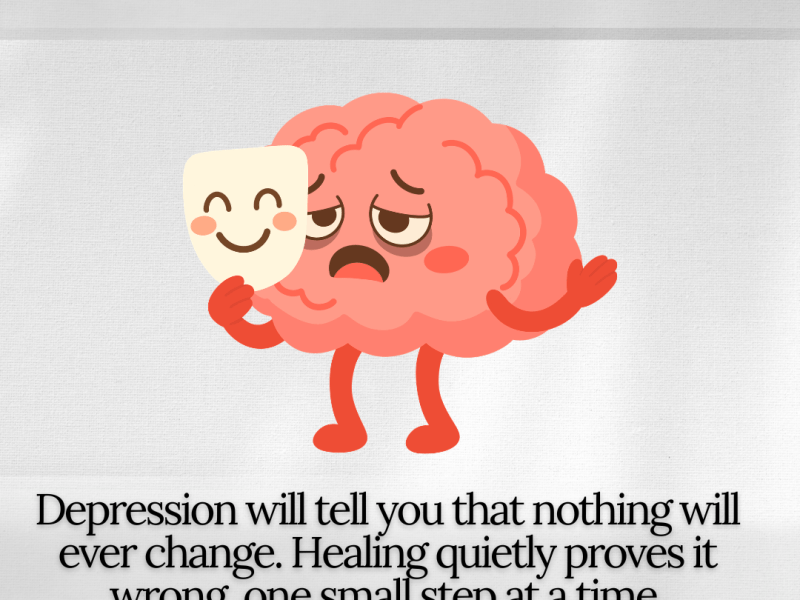
The Lies Depression Tells You (And How to Keep Moving Forward
Depression isn’t just a heavy blanket of sadness or a lack of energy; it’s an active narrator in your head. It functions like an invasive software program, systematically rewriting your thoughts, distorting your memories, and filtering out everything positive until the world looks entirely unrecognizable. If you’ve been struggling to find your footing, it helps…

Recognizing and Understanding Emotional Patterns: A Journey Towards Emotional Intelligence
In today’s world, emotional intelligence is profoundly emerging. Your emotional patterns significantly shape your life, influencing your relationships, happiness, and decision-making abilities. In this post, we’ll explore – How do your emotional patterns look like? How to identify our emotional patterns? How to bring self awareness to our emotional patterns? And provide you with a…




Leave a Reply